
The proposal that arrives in your inbox looking polished, well-structured, even confidently argued until you read past the third page and realise no one who prepared the proposal actually understands what they are proposing. The deck that was clearly assembled rather than thought through. The strategy document that answers every question except the right one.
This is not a new problem but AI has accelerated it dramatically.
Executives can now produce a 20-slide deck in the time it once took to draft an agenda. Managers can generate a market analysis before their morning coffee goes cold. The friction that once forced a certain amount of thinking has been removed, and with it, a hidden benefit. The resistance that slowed people down also made them reckon with what they actually knew.
What we are left with is volume without depth. Speed without understanding.
The Real Gap Is Not Output. It Is Comprehension.
When leaders do not make time to work through ideas with their teams, a quiet dependency develops. Executives learn to produce without understanding. Managers learn to approve without interrogating. Over time, the organisation loses its capacity for genuine creative thought because the practice of thinking has been quietly outsourced.
Innovation does not emerge from the fastest output. It emerges from the collision of real comprehension, honest questioning, and the willingness to sit with a problem long enough to see it clearly.
That takes time and the kind of leadership that considers thinking a core part of the job, not an inconvenience that gets in the way of it.
What the Research Actually Shows
A 2025 Harvard Business Review study put nearly 300 executives and managers through a forecasting exercise. Half consulted ChatGPT before making their predictions. Half discussed the same problem with peers.
The AI group became significantly more optimistic, more confident, and produced worse forecasts.
The peer discussion group, by contrast, became more cautious. Healthy scepticism, social accountability, and the friction of another person pushing back made them think more carefully.
The AI did not make the executives less intelligent. It made them feel more certain than the situation warranted and certainty, when it is unearned, is one of the most dangerous things a leader can carry into a high-stakes decision.
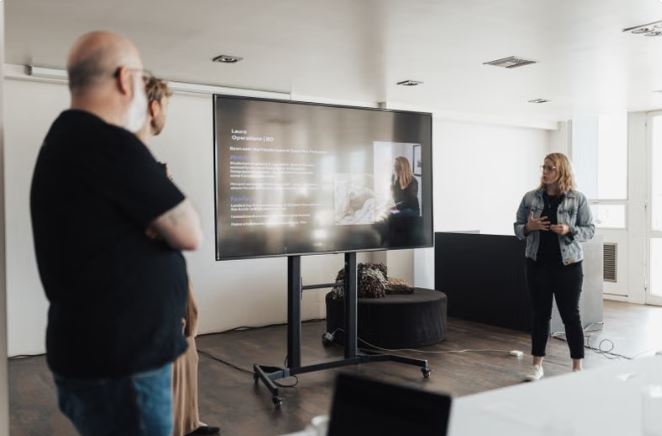
A separate piece from UC Berkeley’s Haas School of Business made a related observation about AI-generated proposals in procurement. Evaluators increasingly noticed that submitted documents were technically polished but revealed, under questioning, that the people behind them did not fully understand what they had proposed. The fix some organisations moved to: oral presentations, where you cannot hide behind a well-formatted document. You either understand it or you don’t.
What Generative Leadership Actually Looks Like
Being generative is creating the conditions for genuine thinking to happen, in yourself and in the people you lead.
That means building in the time to understand, not just to approve. It means asking the question behind the question: not just “is this proposal ready?” but “does this person understand what they are recommending?” It means treating comprehension as a leadership responsibility, not an assumption.
In an era where output is increasingly cheap, the leaders who will matter are those who know the difference between a document that was generated and an idea that was earned.
Slowness, in this context, is not inefficiency. It is the only way to stay genuinely ahead.