
Last night I watched a film called Girlfriend Day, about a man who writes greeting cards for a living, the sappy, sentimental Hallmark kind that somehow still make people cry in the aisle. His marriage had ended a few years ago, and for the first time in his career he couldn’t write a single meaningful line. Every card came out hollow or cheesy or even desperate. What struck me wasn’t the writer’s block itself, it was what eventually broke it. Falling in love again, badly and honestly, finally gave him a card so good that two competing companies ended up fighting over it.
Growing up, I used to buy and/or make actual cards for the people I cared about. Then in the late nineties, Blue Mountain digital cards arrived, and suddenly a card could be sent in ten seconds instead of an afternoon. It felt like magic at the time. Looking back, I think it was the first lesson in a pattern we’re still living through, where the tool that saves us the trip to the store also, almost invisibly, saves us the searching, the struggling, the version of ourselves that only shows up when we’re forced to sit with a hard feeling until it finds its own words.
The convenience trap
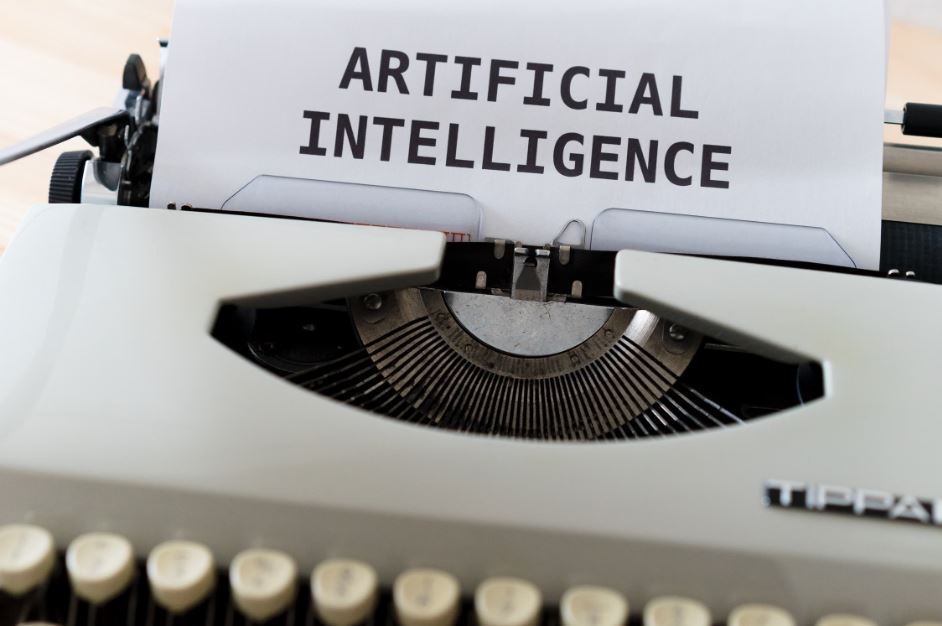
We’re living through a much bigger version of that same moment now, where almost any process can be handed off, from strategy decks to birthday messages to the eulogy nobody wants to write at midnight. None of this is inherently wrong, and I’ll admit I use these tools myself, often gratefully, when they save me a Tuesday afternoon I’d genuinely rather spend elsewhere. In fact, this very post started as my outline, a handful of half formed thoughts, before AI helped me turn it into something readable. I’m not a writer and writing is simply the medium I use to market what I actually make, which is art based journeys, so I’ve made a kind of peace with letting the tool carry the sentences while I carry the meaning.
However, convenience has a habit of quietly expanding past its original job description. It starts with the report nobody enjoyed writing anyway, and it ends, if we’re not paying attention, with us outsourcing the very parts of work that used to build our judgment in the first place, the wrestling with an unclear problem, the false start, the sentence rewritten four times because some quieter part of you knew it wasn’t true yet.
Researchers who study expertise have found that struggle isn’t a design flaw in learning, it’s the mechanism. Which means the wrestling was never inefficiency dressed up as effort. It was the thing itself, the process by which craft, taste, and self-knowledge get built in the first place. The card writer in that film couldn’t shortcut his way to a line worth fighting over. He had to actually break, and then actually heal, before the words meant anything again.
A shared question, three different lives
This shows up differently depending on where you sit, but it shows up everywhere.
If you’re employed, the pressure tends to arrive as speed. Everyone now expects a polished first draft within minutes, so the muscle you’d use to sit patiently with an unclear problem gets less practice than it used to, and like any muscle, it quietly weakens from disuse.
If you’re self employed, it tends to arrive as volume. You can now produce ten times what you once could, so you do, and somewhere inside that flood of output, your actual voice, the thing that made people want to hire you rather than a competitor, gets harder to locate, even for you.
If you’re semi retired, it arrives more quietly still. The processes you’re stepping back from, the meetings, the decisions, the constant producing, were often what gave your days their shape. Handing even more of that off doesn’t necessarily hand you back freedom. Sometimes it just hands you a quieter mind that doesn’t quite know what to do.
Three very different lives, and yet one question underneath all of them: when the doing gets easier, what happens to the part of us that used to do it?
Making as a way back in
Whether I’m designing a leadership programme or planning a slow journey through a place I love, I lean on a simple framework: Place, Mind, Making.
Place is wherever your attention actually lands once you’ve stepped away from the feed and the inbox. Mind is whatever surfaces when you’re no longer performing for an audience. Making is the proof that you were genuinely there, a sketch, a written page, a conversation you couldn’t have had over email because it needed your full, undivided, slightly uncomfortable attention.
None of it is efficient, and I’ve stopped apologizing for that. All of it is where the self-knowledge lives that no tool can generate on your behalf, because it was never a form of information to begin with. It was always a form of practice, closer to what that card writer did with his own broken heart than to anything a machine can produce on command.
An invitation, not a rule
I’m not arguing for nostalgia, and I’m certainly not arguing that we refuse the tools now available to us. What I am arguing for is keeping a few minutes in your week where nothing gets outsourced, where the slow, occasionally clumsy work of thinking, making, and noticing still belongs entirely to you.
That’s part of why Slow Lines exists. It’s a deliberate return to the kind of attention that builds a person rather than just fills a schedule. Some things really are worth doing the long way.
What’s one process in your week you’d never hand off, no matter how good the tools get?