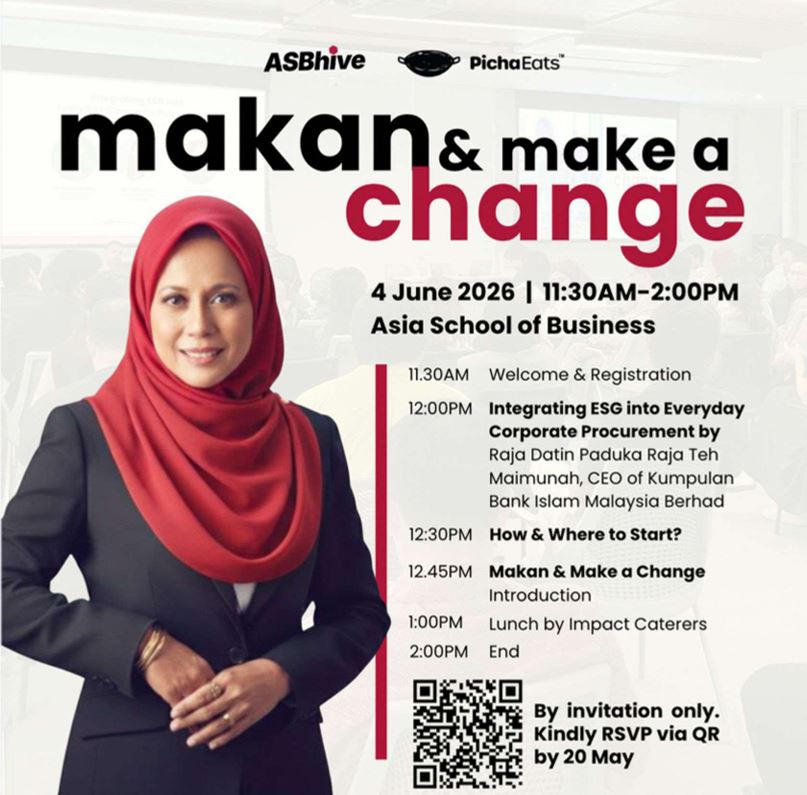
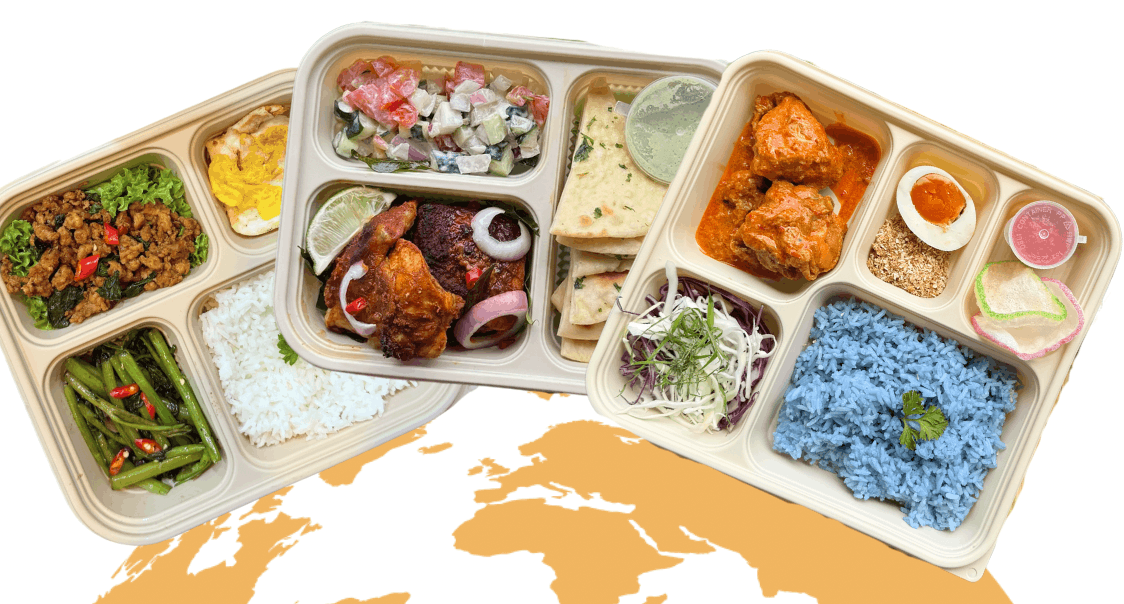
Last week, I attended an interesting event organized by the Asia School of Business (ASB) and Picha Eats and ate lunch prepared by social enterprises.
The food was warm, generous, full of flavour but what stayed with me wasn’t the food. It was the story behind it.
PichaEats, one of the vendors at the Makan & Make a Change session organised by ASBhive and PichaEats, trains refugees and stateless communities in Malaysia to become skilled chefs. Palestinian, Syrian, Afghan, Pakistani, Myanmarese, Iranian totalling 70 chefs from six countries, earning a living and building dignity through food. When a Malaysian corporation orders catering from PichaEats, it is not just buying lunch. It is buying someone’s ability to stay in this country with purpose.
That is social procurement. And that afternoon, two important panelists present were by Dr Melissa Foo of the Malaysia Impact Alliance (MYImpact) and former MITI Deputy Minister Dr Kian Ming, with the conversation in that room being about why more Malaysian corporations are not doing it.
What happened in that room
The session introduced a simple and powerful concept: that the most accessible entry point into ESG and community investment is not a big strategy or a CSR budget line. It is a procurement decision. Who prepares your lunch? Who makes your door gifts? Who provides your mocktail bar at your next corporate event?
Four other social enterprises were in the room alongside PichaEats. Limelight by PichaEats trains marginalised youth in non-alcoholic mixology and hospitality, giving them skills, income, and a stage. Eat x Dignity operates as a training ground for at-risk youths through fresh, locally-sourced food with profits channelled back to educate 2,000 children annually through the Dignity for Children Foundation. Graze Eatery works directly with local farms to rescue surplus and imperfect produce, turning what would have gone to waste into thoughtful, HALAL-certified menus. Nangka is a Malaysian based food technology company that focuses on creating plant based alternatives to foods like meat, milk, flour, animal feed, pet food from a single source: jackfruit.
Five vendors. Four distinct communities served. One lunch.
The simplicity of the model is its power. You were going to order catering anyway. You were going to buy door gifts anyway. The question is simply who you buy from — and what that decision does in the world.
What the data tells us
The Malaysia Social Procurement Country Report 2024, produced by MYImpact in partnership with Yunus Social Business, maps the landscape of impact-driven businesses in Malaysia with striking clarity.
Malaysia has 463 registered social enterprises, with a government target of 5,000 by 2030. Of the 75 impact-driven businesses surveyed for the report, 65% are already profitable or at break-even. These are not charity cases. They are businesses. 77% of them generate more than 75% of their revenue from corporate sales — which means they are not asking corporations for donations. They are asking to be taken seriously as suppliers.
And yet the report reveals that most corporate engagement with these businesses remains transactional and one-off. Half of all transactions are single purchases rather than sustained contracts. Most corporates do not have an internal procurement policy that recognises or prioritises social enterprises. Many do not even categorise their purchases from these businesses as social procurement.
The gap is not awareness. It is intent. Most Malaysian corporations already know social enterprises exist. They just have not made the decision to integrate them into how they operate.
What struck me most
One of the vendors in the room was the founder of NANKA, a Malaysian food technology company built around jackfruit as a meat substitute. His business trains marginalised food entrepreneurs through shared kitchens, certification support, and structured mentorship. When he spoke about the challenges of selling to corporations, the room got quiet.
Getting in the door is the first problem. Finding the right person within a large organisation who has both the interest and the authority to make a purchasing decision from a social enterprise is, for most SE founders, months of unpaid work. And when they do get in the door, the next challenge is price. People tend to assume that social enterprise catering costs more than conventional catering. Sometimes it does. But that premium, where it exists, goes somewhere real — towards training, welfare, education, community wages. It is not margin. It is mission. The challenge is that most procurement teams have never been taught to read a price that way.
Dr Melissa Foo made a point that stayed with me. She said that not all social enterprises need to operate on a B2B model — B2C works too, and in some cases works better. But regardless of the model, SEs need to get more creative and more intentional about telling their story. The price on the invoice is never the whole story. The story behind it is what makes the decision make sense.
Dr Kian Ming was direct about the structural challenges. Getting into government contracts requires navigating tenders through the Ministry of Finance — a process that is complex and slow, and not well-suited to the operational realities of most small social enterprises. His recommendation was pragmatic: approach Bursa-listed companies instead. They have sustainability reporting obligations, procurement budgets, and ESG commitments that create genuine demand for what impact-driven businesses offer.
He also addressed the scaling question that comes up every time a corporation expresses interest and then hesitates. Not every social enterprise can supply a thousand meals for a large corporate event. But several social enterprises working together can. Start with a hundred meals. Place a repeat order. Let the relationship and the capacity grow together. For ongoing volume, cafeterias in commercial buildings are an underutilised channel — predictable demand, manageable quantities, and a natural fit for community-based food businesses.
The gap, as the session made clear, is not on the supply side. Social enterprises are being equipped with business skills through INSKEN and other initiatives. The capacity is being built. What has not kept pace is the demand side. Corporate procurement teams have not yet been taught what it means — or what it takes — to include a social element in their purchasing decisions. The skills, the frameworks, and the appetite for impact exist. The procurement infrastructure to act on it does not yet.
What Malaysian corporations can start doing next week
The session offered five ideas that require no budget approval and no strategy document. Let a social enterprise run a sharing session during lunch. Open your foyer for an SE marketplace. Pilot a single event catered entirely by impact-driven businesses. Let employees suggest SE vendors they already know. Order from a social enterprise caterer once, before deciding anything else.
Impact does not always come from big strategies. Sometimes it comes from small, everyday decisions made consistently over time.
That is cause marketing in its most practical form. A supply chain decision, made deliberately, that compounds.
For Malaysian corporations ready to take that first step, the vendors, the food, and the framework already exist. The next Makan & Make a Change session is on 4 June 2026 at the Asia School of Business. By invitation only.