
Most companies want the brand equity of having values without the cost of actually holding them.
Ben & Jerry’s has spent over four decades demonstrating what happens when you go the other way and the story is more complicated, more instructive, and more honest than the version usually cited in marketing textbooks.
This is not a profile of a perfect company. It is an examination of what genuine cause marketing actually requires of a business and what it costs when the commitment is real.
How it started: values as business architecture, not marketing layer
Ben Cohen and Jerry Greenfield embedded social responsibility into Ben & Jerry’s DNA from day one, establishing what they called a “triple bottom line” approach. Product quality, economic sustainability, and social mission operating simultaneously.
This starting point matters enormously. Most companies approach cause marketing as something that gets layered onto an existing business. A campaign that runs alongside the product, a CSR budget that sits separately from operations, a values statement that lives on the website but rarely influences a commercial decision.
Ben & Jerry’s explicitly rejects this framing: “We don’t approach social impact as a marketing gimmick or a corporate social responsibility box to tick. We believe in authentic action, one that aligns to a brand’s ethos.”
The practical consequence of this position is that cause commitments at Ben & Jerry’s are upstream of marketing decisions, not downstream of them. The cause shapes what gets made, how it’s priced, who the company partners with, and critically what the company is willing to refuse.
The infrastructure of genuine commitment
One of the most revealing details in the Ben & Jerry’s story is structural rather than strategic.
Ben & Jerry’s is believed to be the only major consumer brand with a dedicated in-house activism manager, a role held by someone with prior experience in grassroots campaigning, whose job is to build relationships with social movements rather than create campaigns internally.
It exists specifically to ensure that the brand’s cause commitments are driven by the needs of the movements they claim to support, rather than by what is convenient or comfortable for the marketing calendar.
The starting question in every campaign is: “How can Ben & Jerry’s be of service to you?” addressed to the grassroots organisations they partner with, not to the brand’s own communication objectives.
For Malaysian business leaders thinking about cause marketing, this distinction is worth sitting with. The question most companies ask is: what cause can we attach our brand to? The question Ben & Jerry’s asks is: what do the people working on this cause actually need from us? The two questions produce entirely different programmes.
What genuine values cost: the Unilever tension
The most instructive chapter in the Ben & Jerry’s story is not a campaign. It is a governance crisis.
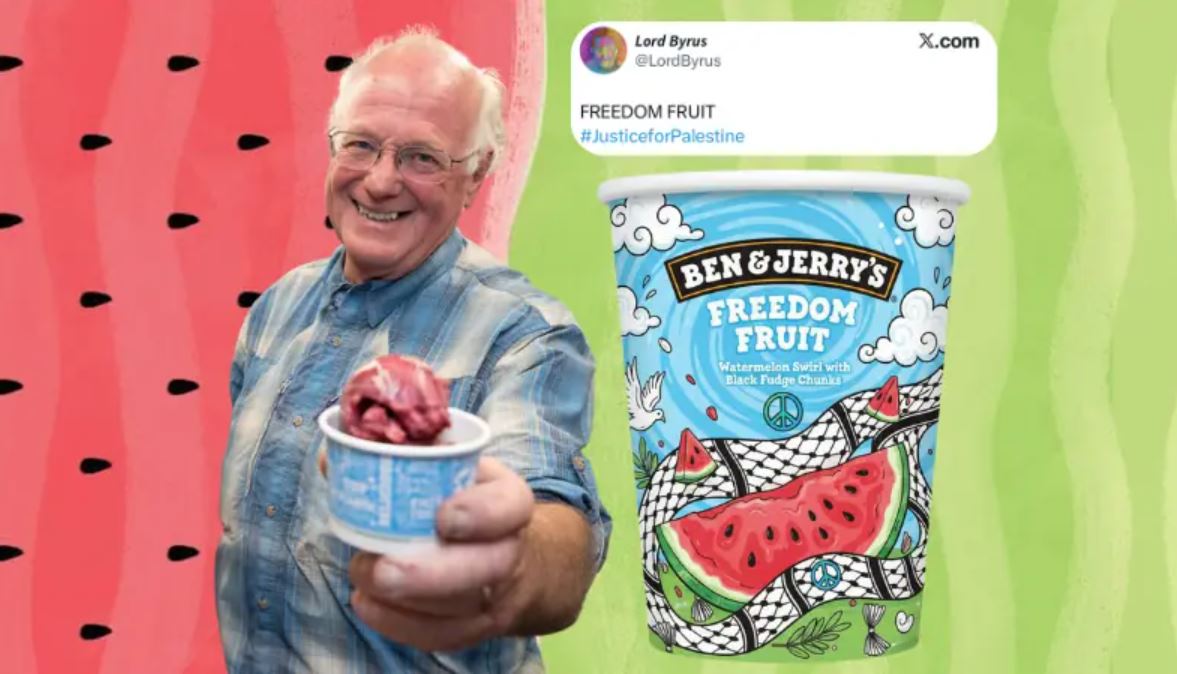
In 2021, Ben & Jerry’s board voted to stop selling ice cream in Israeli-occupied settlements, citing alignment with its human rights values. In 2022, Unilever overruled the board by selling its Israeli business to a local licensee, reigniting significant debate about corporate interference in social mission governance.
The conflict continued into 2025, with Ben & Jerry’s filing a lawsuit accusing Unilever of trying to silence the brand from expressing support for Palestinian refugees and blocking a social media post that mentioned President Trump.
This is what genuine cause commitment eventually surfaces: a conflict between the values embedded in a brand and the commercial interests of the entity that owns it. Most companies resolve this conflict by never taking positions serious enough to create it in the first place. Ben & Jerry’s has been living inside it publicly for years.
The outcome, interestingly, has not been brand collapse. After the People’s March in January 2025, which Ben & Jerry’s sponsored, a TikTok video from the event generated more than two million likes, and the brand gained approximately four million new followers. The segment of consumers who value authentic brand commitment has, so far, more than replaced those who have disengaged.
What this looks like in practice: flavours as policy positions
One of Ben & Jerry’s most distinctive tactics is embedding cause commitments directly into the product.
Limited-edition flavours like “Justice ReMix’d” and “Save Our Swirled” tie social issues directly to products, making activism part of the brand experience rather than a separate communication layer. “Pecan Resist” launched as both a flavour and a political statement, product development directly serving a messaging objective.
This approach is harder to dismiss as performative because it carries commercial risk. A flavour that takes a controversial political position can fail. It can cost sales. The fact that the company does it anyway is precisely what makes it credible to the consumers it is trying to reach.
The honest lessons for Malaysian business leaders
The Ben & Jerry’s story has taken a darker turn since 2025. Co-founder Jerry Greenfield resigned in September 2025 after nearly fifty years, saying the independence that formed the basis of the original sale to Unilever was “gone.” Calm Collective Asia The lawsuit continues. The brand has been spun off into a new ice cream company. The founders want to buy it back.
What this adds to the lesson, rather than undermining it, is the clearest possible illustration of what genuine cause commitment eventually costs. A co-founder walking away from the company he built because the values he built it around could no longer be protected inside the corporate structure he’d agreed to.
For business leaders thinking about where their own values actually live — in the brand, or in the ownership structure behind the brand — that is perhaps the most instructive data point of all.