
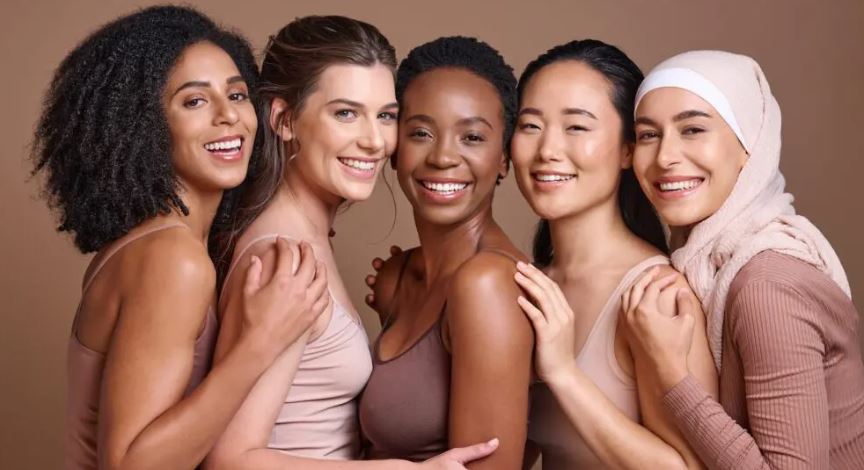
Most cause marketing campaigns last a season. Dove’s lasted twenty years.
In 2004, Dove launched a campaign built on a single uncomfortable finding: only 2% of women worldwide would choose to describe themselves as beautiful. Rather than ignore this or work around it, Dove made it the centre of everything they did for the next two decades.
What followed wasn’t just good marketing. It was a structural business decision that reshaped how the brand operated, what it stood for, and ultimately what it sold. Within three years of launching Real Beauty, Dove’s sales doubled from USD2 billion to USD4 billion. Twenty years later, people are still writing about it.
This is worth examining carefully, not as a feel-good story, but as a business case. Because most companies that attempt cause marketing get a fraction of that result. The question is why.
What Dove actually did differently
The beauty industry in the early 2000s operated on a simple and largely unexamined formula: show women an idealised version of beauty, create insecurity, sell the product as the solution. Every major brand used this playbook. It worked commercially, in the short term, and everyone accepted it as just how things were done.
Dove saw what competitors missed, that most beauty advertising wasn’t building confidence, it was creating insecurity. Instead of competing on product features, Dove chose to compete on values. They commissioned a global study, sat with findings that were genuinely uncomfortable, and made a deliberate decision to build the brand around what they discovered rather than what was convenient.
This matters because the instinct in most companies is the opposite. Research surfaces an uncomfortable truth. Someone notes the PR risk. The finding gets buried. The brand continues doing what it was already doing.
Dove didn’t do that. And the distinction between what they chose and what most brands choose is precisely where cause marketing either creates real value or becomes theatre.
The results were real but so were the contradictions
A serious analysis of Dove cannot ignore the criticism, and your business thinking shouldn’t either.
While Dove was running its body-positive Real Beauty campaign, its parent company Unilever was simultaneously running campaigns for Axe Body Spray and Fair and Lovely – products whose messaging directly contradicted everything Dove stood for. Critics pointed out that a corporation can’t simultaneously champion natural beauty and sell skin-lightening cream without the integrity of both positions becoming suspect.
This is not a reason to dismiss the Dove case. It is a reason to take it seriously. Because what it reveals is that cause marketing at the campaign level, without alignment at the corporate level, will eventually surface a contradiction that undermines everything you’ve built. Consumers across Asia are increasingly critical of brands that don’t practice the values they advocate and are particularly harsh when they believe brands are simply making use of a cause for commercial gain.
The lesson is not “don’t do cause marketing.” The lesson is: the cause has to be structurally true, not just strategically convenient.
What made it structurally true for Dove
Three decisions separated Dove’s approach from a standard marketing campaign:
The first was research before positioning. Dove commissioned a comprehensive global study before designing a single ad, drawing on 3,200 women across ten countries, with academic input from Harvard and the London School of Economics. They didn’t pick a cause because it was trending. They found a genuine tension between what the industry was doing and what women were experiencing, and they built from that.
The second was institutionalising the purpose beyond marketing. The Dove Self-Esteem Project, launched in 2006, has reached more than 100 million young people globally, creating a halo effect around the brand that competitors have struggled to replicate. This wasn’t a campaign extension. It was a separate programme with its own team, funding, and metrics. The brand was putting resources behind the cause, not just words.
The third was staying consistent as the cultural context shifted. What worked in 2004 wasn’t enough in 2014, and wasn’t enough in 2024 but Dove kept evolving the message without losing the core idea. That balance of consistency and adaptability is why the campaign didn’t fade after a season. In 2024, Dove became the first beauty brand to officially pledge never to use AI-generated images to represent real women, a natural evolution of the same original position.
The question for Malaysian businesses
Most of the cause marketing conversations in Malaysia still centre on CSR compliance — the annual report, the donation to a charity, the tree planting event. These are not without value, but they are not cause marketing. They are public relations with good intentions.
Real cause marketing asks a harder question: what does your business genuinely care about, that also happens to be true about the people you serve? That intersection is rare. When you find it, and you’re willing to build the business around it rather than just campaign around it, the commercial and the social reinforce each other in ways that are very difficult to copy.
Dove found that intersection in the gap between how women were being portrayed and how women actually experienced themselves. Twenty years later, no competitor has replicated it, not because they couldn’t see it, but because they weren’t willing to go where it required them to go.
That’s the real lesson. Not that cause marketing is a smart strategy. But that the brands which do it well are usually the ones that started somewhere true, and stayed there.