
For many companies, CSR begins after the business succeeds.
Once profits are made, donations follow.
Community programmes are introduced.
Occasionally, a foundation is created.
But some companies approach impact differently.
Instead of asking what they can give back, they ask a more strategic question:
What if the business itself was designed to solve societal challenges?
Few Malaysian companies demonstrate this approach better than Sunway Group.
The Business Context
Property development often attracts criticism.
Large projects reshape landscapes, influence traffic patterns, and determine how communities grow. When poorly designed, developments can create environmental strain and disconnected neighbourhoods.
But when planned thoughtfully, the same projects can create something very different: integrated ecosystems.
This is the philosophy behind many of Sunway’s developments.
The Strategic Shift
Instead of building standalone commercial projects, Sunway began designing integrated townships.
These developments combine multiple components in one ecosystem:
-
residential communities
-
healthcare facilities
-
education institutions
-
retail and commercial spaces
-
green infrastructure and parks
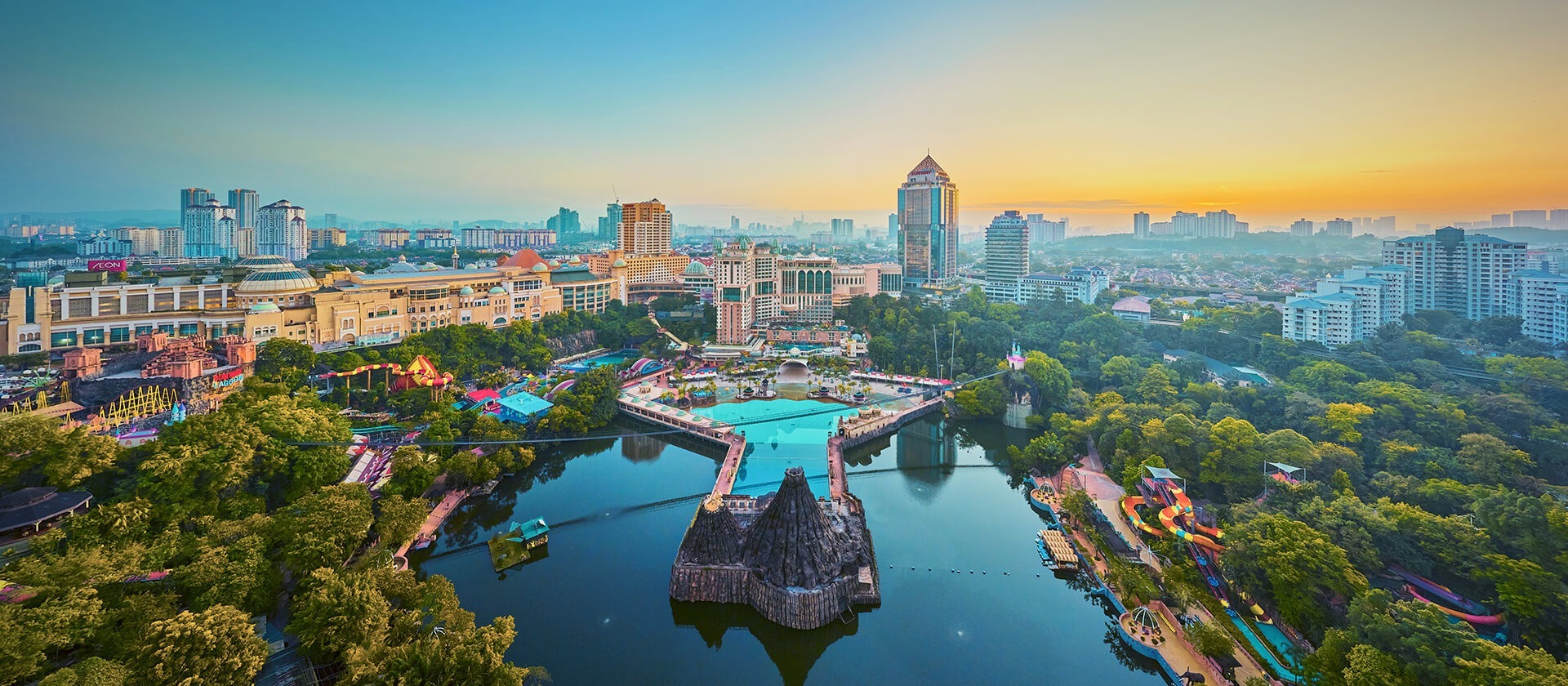
One of the most prominent examples is Sunway City Kuala Lumpur, a township built on what was once a tin mining wasteland.
Today, the area hosts universities, hospitals, businesses, and residential communities within a walkable urban ecosystem.
The transformation illustrates how development can reshape not just land — but livelihoods and opportunity.
What They Did Differently
Sunway approached development as a long-term ecosystem strategy.
This meant investing in:
• education through institutions such as Sunway University
• healthcare infrastructure like Sunway Medical Centre
• sustainable urban planning with green spaces and water management
• partnerships supporting community development and environmental goals
Through the Sunway Foundation, the group has also channelled funding into education access and community programmes aligned with the United Nations Sustainable Development Goals (SDGs).
Rather than separating philanthropy from business operations, Sunway linked the two through a broader development vision.
Why It Worked
The success of Sunway’s model lies in alignment.
Property developers shape how people live, work, and interact.
By designing integrated townships, the company influences:
-
access to education
-
healthcare availability
-
economic activity
-
environmental sustainability
Impact becomes a natural outcome of the business model.
Instead of adding CSR later, the company embeds it into planning from the beginning.
What This Means for Founders & SMEs
Most businesses may not be building townships.
But the principle still applies.
Every company influences an ecosystem — even if it is smaller.
It might be:
-
suppliers
-
employees
-
customers
-
local communities
The question for founders is not necessarily how much they give, but how intentionally they design the system around their business.
The Sustainable Development Goals (SDGs) were created to highlight these intersections between economic activity and societal progress.
When companies recognise where their influence sits, impact becomes easier to sustain.
Closing Reflection
Some companies run CSR programmes.
Others design businesses that generate impact as they grow.